Home > American Destinations > Costa Rica > SANSA Airlines Review: Flying Domestically in Costa Rica
Four Flights on SANSA Airlines

About My Flights on SANSA Airlines

In my opinion, SANSA Airlines is one of the best ways to get around Costa Rica. Despite being a small country, Costa Rica can take hours to travel across by road because of mountains, winding roads, traffic, and poor road conditions in some areas. When I first booked my flights, I was slightly worried based on the SANSA Airlines reviews I had read online.

Despite those reviews, I booked four flights on SANSA and found it to be the fastest and easiest way to explore different destinations throughout Costa Rica.

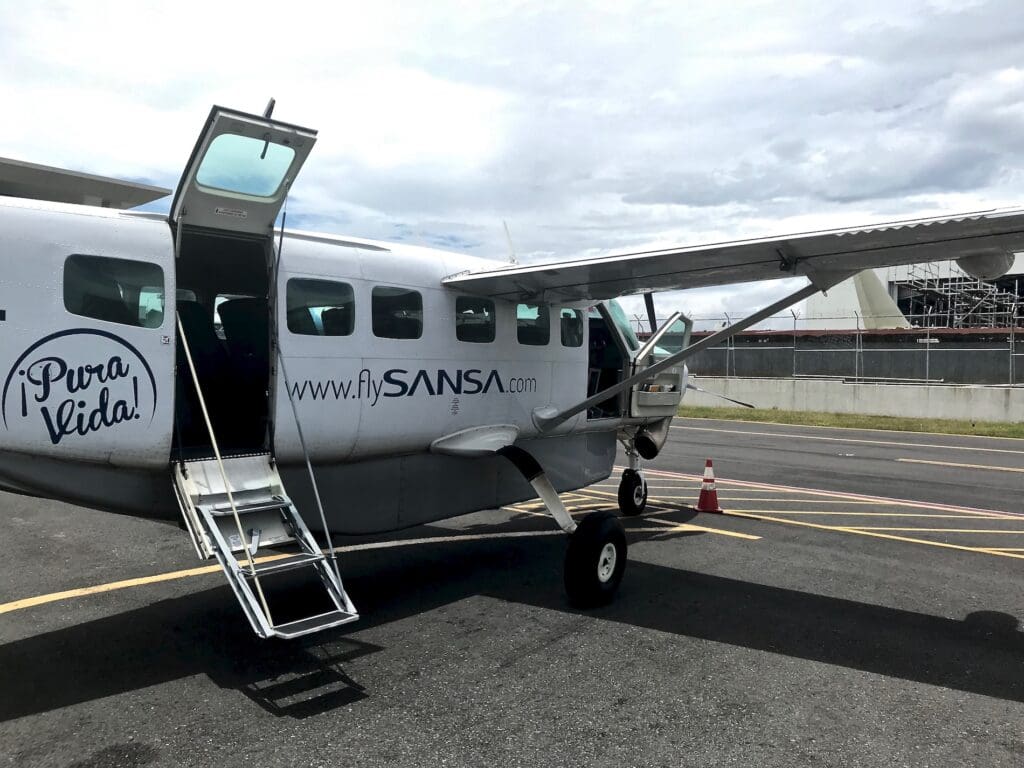
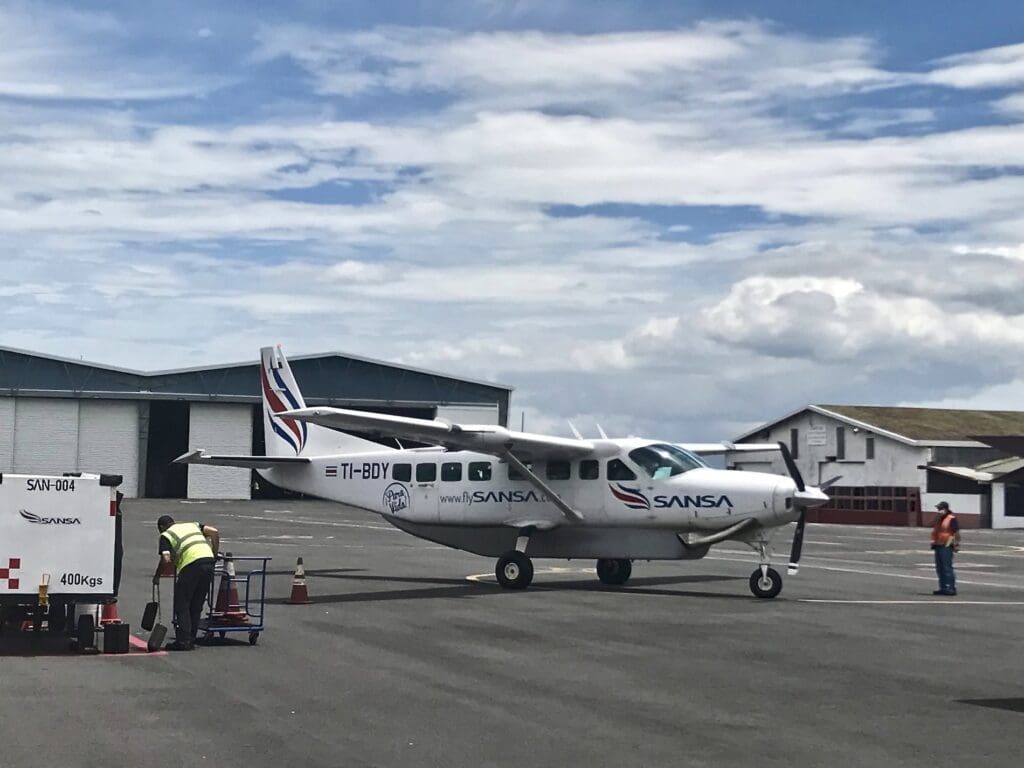
SANSA Airlines' Cessna 208 Caravan at San Jose Airport
SANSA Airlines Cessna 208B Caravan at San Jose Airport
SANSA Airlines Ticket Showing SANSA Routes

Below, I will review my experience flying SANSA Airlines in Costa Rica. Overall, I was extremely happy with the service that SANSA provided. I did have one bad experience that helped me understand why some people post negative reviews of SANSA online. I will explain that experience further down the page.

All four of my flights on SANSA Airlines either began at, ended at, or connected through Juan Santamaría International Airport’s Domestic Terminal near San Jose. I believe most of SANSA’s regional flights connect through either San Jose or Liberia.

When I flew, I found that the flights were reasonably priced, usually between $90 and $150. My ticket included checked luggage and a personal item / carry-on-style bag, although SANSA’s baggage rules can vary by fare type and should always be checked before flying.

SANSA operates a fleet of Cessna Grand Caravan aircraft. These are small, single-engine propeller planes with two pilots and room for a small number of passengers. Only one of my four flights was direct. The others included one stop, but I still felt like I got to my destination quickly because each leg was short.

SANSA Airlines Review: Flying Domestically in Costa Rica - Table of Contents

Disclaimer:  Buzzin’ Around the World strives to provide accurate and up-to-date information based on our research at the time of publication. We respect all applicable laws and fair use principles. If you believe any information is incorrect or violates regulations, please contact us at buzzinaroundtheworld@gmail.com.

Affiliate Links and Reviews:  We use affiliate links to generate income and may receive a commission at no additional cost to you when you use our links. We strive for honest and transparent reviews, even for products which we receive compensation.

Content Creation:  Our content is based on our own travel experiences. All photos are our own unless otherwise stated. We sometimes utilize AI tools to assist with tasks like generating titles, summarizing content, and improving organization.

For more information:  For more information, please click HERE to visit our privacy policy page. We can be reached at buzzinaroundtheworld@gmail.com

My SANSA Airlines Experience at a Glance

Flights taken: Four
Airports used: San Jose, La Fortuna, Tortuguero, Quepos / Manuel Antonio area, and Corcovado as an unexpected stop
Aircraft: Cessna 208B / Cessna Grand Caravan
Best part: Saving hours of travel time compared with driving
Biggest concern before flying: Safety and online reviews
Biggest issue during my trip: A frustrating customer service experience and an unexpected route change
Would I fly SANSA Airlines again? Yes, but I would pack carefully, verify my baggage allowance, and allow extra time if connecting to another flight or appointment.

SANSA Cessna 208B / Cessna Grand Caravan

What Planes Does SANSA Airlines Use?

SANSA uses small Cessna Grand Caravan (Cessna 208B) aircraft for its domestic flights in Costa Rica.

These were the smallest planes I had ever flown on. I had been on propeller planes many times before, but never one with a single propeller. Despite that, I was not overly worried during my flights. In reality, my mother and younger brother were more nervous about my SANSA flights than I was.

The Cessna Grand Caravan provided a comfortable and fairly smooth ride. I will say that the plane definitely bounces around more during turbulence than a large jet, but the ride usually smooths out once the plane reaches cruising altitude.

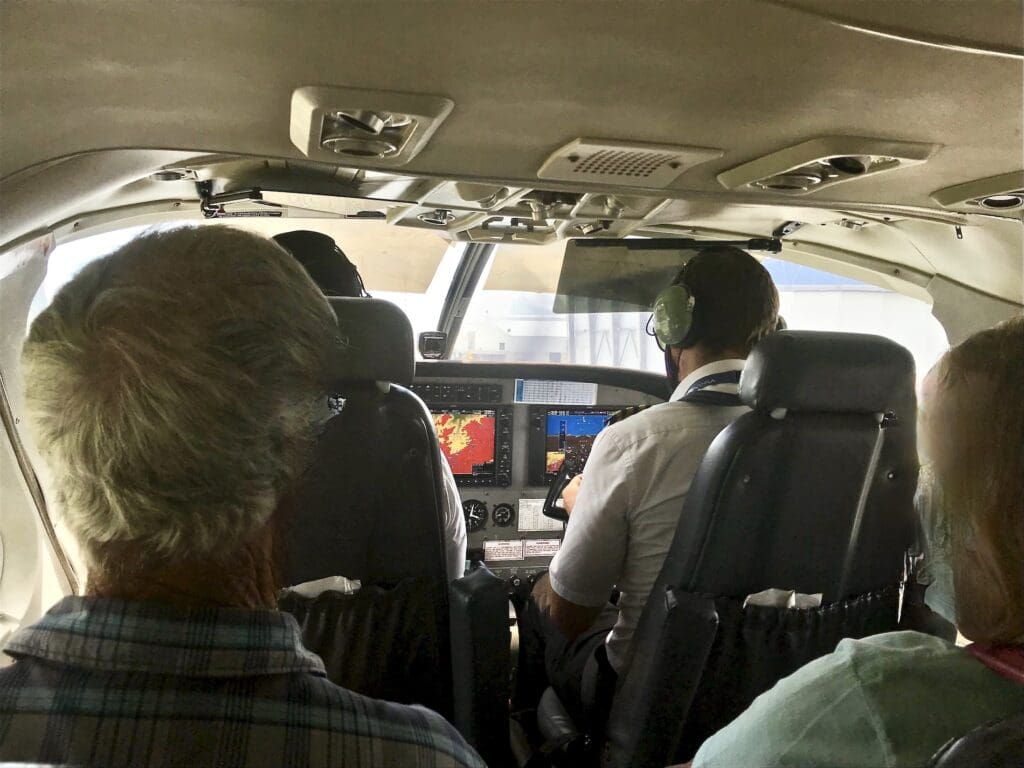
It was very interesting to watch the pilots, especially during takeoff and landing. I was surprised by how active they were throughout the flight.

SANSA Cessna Grand Caravan (Cessna 208B)
SANSA Cessna Grand Caravan In-Flight

Is SANSA Airlines Safe?

One of the biggest questions travelers have is, is SANSA Airlines safe?

I had the same question before my trip. I had read mixed reviews online, and the thought of flying on a small single-engine aircraft made me a little nervous. In reality, I felt comfortable on all four of my SANSA flights.

The Cessna Grand Caravan is much smaller than a commercial jet, so the experience does feel different. You are closer to the pilots, the cabin is smaller, and the plane can bounce around more in turbulence. That said, my flights felt controlled, professional, and smoother than I expected.

I especially liked being able to watch the pilots during takeoff and landing. It gave me a better appreciation for how active they were throughout the flight, even when the plane was on autopilot.

I am not an aviation safety expert, so I cannot personally evaluate the full SANSA Airlines safety record. What I can say is that based on my four flights, I would fly SANSA again.

On Board View - SANSA Airline's Cessna
In Flight Photo - Above the Clouds on SANSA Airlines

SANSA Airlines Baggage Allowance and Weight Limits

The SANSA Airlines baggage allowance is one of the most important things to understand before flying. These are small planes, and baggage weight matters a lot more than it does on a normal commercial jet.

When I flew, my ticket included checked luggage and a personal item / carry-on-style bag. My checked bag limit was 40 pounds, and my personal item / carry-on-style bag limit was 10 pounds. However, SANSA’s baggage allowance can vary by fare type, so you should check your exact ticket before flying.

SANSA may weigh your checked bag, your personal item / carry-on-style bag, and sometimes even you with that bag. This happened to me at the San Jose Domestic Terminal. It also happened again before one of my return flights.

The biggest thing I learned is this: do not assume your personal item / carry-on-style bag will be treated casually just because it is small. On one of my SANSA flights, my personal item / carry-on-style bag was weighed and came in at 13.4 pounds. That was over the 10-pound limit, and I had to move items around between my bags.

It is also important to know that your cabin luggage will not typically be accessible during flight. Cabin baggage is stored in the back of the plane in a cargo area.

If you are bringing camera gear, electronics, or anything heavy, this is something to think about before flying. I would recommend weighing both your checked bag and your personal item / carry-on-style bag before arriving at the airport.

SANSA Airlines Cabin Baggage Storage Area

SANSA Airlines Regular vs Full Fare

Another common question is the difference between SANSA Airlines regular vs full fare.

This is something I would check carefully when booking because the baggage allowance and ticket flexibility may depend on which fare you choose. In general, the cheaper fare is usually more restrictive, while the full fare may include more flexibility or a higher checked baggage allowance.

When I flew, my ticket included a 40-pound checked bag and a 10-pound personal item / carry-on-style bag. Since SANSA’s fare rules can change, I would not assume every ticket includes the same baggage allowance.

Before booking, I would compare the regular fare and full fare carefully and pay close attention to three things:

Checked baggage allowance
Personal item / carry-on-style bag limit
Change or cancellation flexibility

For most travelers, the cheapest fare may be fine if you are packing light. If you are bringing a larger suitcase, camera gear, or have a tight connection, the full fare may be worth considering.

SANSA Departs from Juan Santamaría International Airport's Domestic Terminal

All of my flights on SANSA Airlines either began at, ended at, or connected through Juan Santamaría International Airport’s Domestic Terminal. The domestic terminal at San Jose International Airport is about two hundred yards away from the international terminal in a separate building.

SANSA is the main regional airline operating out of the domestic terminal.

Checking In for SANSA Flights

SANSA’s check-in counter has to be fairly efficient because flights depart frequently throughout the day. When I checked in for my flight, there was only one person ahead of me in line.

The check-in process consisted of checking my passport, weighing my checked luggage, and then having me stand on the scale with my personal item / carry-on-style bag.

The experience going through security at San Jose’s Domestic Terminal was similar to going through security at San Jose’s International Terminal. I was able to keep my shoes on, but I had to take off my belt and remove my computer and camera from my carry-on bag.

San Jose's Domestic Terminal
SANSA Airline's Check-In Counter

No Restaurants Inside San Jose's Domestic Terminal

There are no restaurants inside San Jose’s Domestic Terminal. There are two ATMs before security, bathrooms on either side of security, and one small shop.

The shop has limited hot food options, some souvenirs, and packaged snacks and drinks. I would not count on eating a full meal inside the domestic terminal. If you have a longer connection, I would eat before arriving or bring snacks that fit within SANSA’s baggage rules.

Small Shop Inside San Jose's Domestic Terminal
Waiting Area Inside San Jose's Domestic Terminal

My Experience Flying SANSA

SANSA Airlines Boarding Process

When it is time to board, the agent calls all passengers by name. Each passenger lines up, and the boarding agent verifies their name against a printed list. There are no assigned seats, so I always tried to be quick to get into the boarding line. Typically, SANSA Airlines boards flights about 20 minutes before the scheduled departure time.

All SANSA flights are boarded from the ground level. There is no jet bridge, and boarding feels much more casual than boarding a large commercial flight.

There is no assigned seating, so there is an advantage to boarding early if you want to choose your seat. The Cessna Grand Caravan does not have a lavatory. Thankfully, all of my SANSA flights were short and under 60 minutes.

SANSA Airlines' Cessna 208 Caravan at San Jose Airport
SANSA Airlines Cessna 208B Caravan at San Jose Airport
Boarding Our SANSA Airlines Flight
Boarding a SANSA Cessna 208B Caravan

SANSA Airlines Seats and Legroom

The Cessna Grand Caravan aircraft operated by SANSA are configured in a 1 x 2 layout. The two-seat side is one bench with room for two people. It reminded me a little bit of the seats on a school bus.

Another thing worth noting is that the ceiling is very low. Anyone other than a small child will probably have to duck while moving through the cabin. Because of the low ceiling, I typically selected the single seat closest to the back.

I found that there was just enough legroom on my flights to sit normally. The seats were not overly comfortable, and the seatbelts were a tight fit, but it definitely was not as restrictive as I expected.

All seats on SANSA Airlines are economy class. There are no business class seats on SANSA flights.

SANSA Airlines - Empty Cabin
SANSA Airlines - Cessna 208B Caravan Interior
Limited Legroom on SANSA Airlines

No Flight Attendants on SANSA Airlines

There are no flight attendants on SANSA Airlines flights. The pilots load the bags, read the safety announcements, and communicate with passengers. I found it interesting that all of the announcements on my flights were made in English and not in both English and Spanish.

When you get on the plane, the first thing you may notice is that it can feel hot and stuffy. Do not worry too much. Once the engine starts, the cabin cools down quickly.

Limited Cabin Baggage Space on SANSA Flights

There is no room for carry-on baggage below the seats. All cabin luggage must be secured behind the black curtain near the rear of the plane. On one of my flights, where I was one of only two passengers, I was able to have my bag in the seat next to me. That was the exception, not the rule.

Costa Rica's Small Domestic Airports

All of the SANSA Airlines flights not destined for Liberia or San Jose land at extremely small airports. The airports I experienced were so small that they did not even have security.

Because of the lack of security at the smaller airports, when I arrived in San Jose, I had to exit the secure area and then go through security again before taking my connecting SANSA flight.

SANSA Airlines Cessna at La Fortuna Airport
La Fortuna Airport
La Fortuna Airport

Unexpected Departure Fee at La Fortuna Airport

Some of Costa Rica’s small domestic airports have additional fees that are not part of the ticket. The airport in La Fortuna required an $8 fee when I arrived. When I departed a few days later, I had to pay the $8 fee again.

La Fortuna Airport Terminal Fee

Quepos Airport Was Closed

Another issue you can run into with domestic flights in Costa Rica is airport closures or changes. During my trip to Quepos Airport, which is the gateway to Manuel Antonio National Park, I was surprised when we landed on a dirt landing strip and then had to take a bus about 40 minutes to Quepos.

Apparently, the airport in Quepos was under construction, and this was the closest location where we could land. It was slightly frustrating not knowing this in advance because it meant a longer time without having access to restrooms.

A Bad Experience with SANSA Airlines' Customer Service

My bad experience with SANSA Airlines took place during my return flight from Quepos, or more accurately the auxiliary airport, to San Jose. I arrived at the SANSA headquarters at Marina Pez Vela, as I had been instructed, to catch a shuttle to the auxiliary airport with the dirt runway. One of the agents who checked me in was the same person I had already had a rude interaction with after landing, when she told me passengers did not need to be informed about the Quepos airport change. I smiled, handed over my passport, and tried to move on. My checked bag weighed 37 pounds, which was under my 40-pound limit, but my personal item / carry-on-style bag weighed 13.4 pounds. Since it was over the 10-pound limit, I had to move some camera equipment into my checked bag.

While I was repacking, I accidentally bumped an internet router that had been sitting on the table next to the only chair in the tiny office. It fell to the floor, and the second agent immediately lectured me and said I had broken it and caused them to lose internet. I apologized, but I also pointed out that I had been told to sit there while adjusting my bags. After repacking, my checked bag weighed 40.4 pounds, and my personal item was exactly 10 pounds. I had to pay $2 for the extra 0.4 pounds, which was fine with me.

The two agents told me to return at the top of the hour for the shuttle to the airport. I walked around Marina Pez Vela and came back exactly on time. It was just me and one other passenger on the flight. During the 40-minute ride to the auxiliary airport, the two SANSA agents talked loudly in Spanish and ignored both of us. When we arrived, they only told us to wait in the van until the plane arrived.

At that point, despite the rude customer service, I still would not have had a major issue recommending SANSA Airlines. The bigger problem came after takeoff. Instead of flying north toward San Jose, we started flying south toward Panama. About 40 minutes later, we landed at Corcovado National Park’s airport in southern Costa Rica. I asked the pilot if we were still going to San Jose, and he explained that the flight had been changed to include a stop at Corcovado before continuing to San Jose.

Normally, that would not have been a huge issue, but I had a COVID-19 test scheduled at San Jose airport and was now going to be late. The pilot was shocked that the agents had not told either passenger about the added stop. Thankfully, he helped me call the testing center, and I was able to move my appointment an hour later.

We left Corcovado shortly after and arrived in San Jose about 90 minutes later than expected. The original flight from Quepos to San Jose should have taken about 20 minutes. The pilot told me he would contact corporate because he agreed that passengers should have been told about the route change.

After this experience, I still feel like I can recommend SANSA Airlines, but I understand why some travelers post frustrating reviews online. My actual flights were good. My customer service experience during this part of the trip was not.

The Auxiliary Airport for Quepos/Manuel Antonio Airport
Boarding at Quepos
Boarding at Quepos

Would I Fly SANSA Airlines Again?

Yes, I would fly SANSA Airlines again. For me, the biggest advantage of SANSA was time. Driving around Costa Rica can take a long time, especially when traveling between San Jose, La Fortuna, Tortuguero, Manuel Antonio, and other popular destinations. SANSA made it possible for me to see more of the country without spending entire days in a car or shuttle.

That said, I would do a few things differently next time. I would pack lighter, weigh my personal item before arriving at the airport, check the exact baggage allowance for my fare, and allow extra time if I had an important connection or appointment after landing.

My recommendation is simple: SANSA Airlines is worth considering if you want to save time while traveling around Costa Rica, but you should understand that it is not the same experience as flying on a large airline. The planes are small, the airports are tiny, baggage rules matter, and schedule changes can happen.

FAQ About Flying SANSA Airlines in Costa Rica

Is SANSA Airlines safe?

Based on my four flights, I felt comfortable flying SANSA Airlines. The planes are much smaller than commercial jets, so the experience feels different, but my flights felt professional and controlled. I am not an aviation safety expert, so travelers should check current safety information before booking.

What is the SANSA Airlines baggage allowance?

The SANSA Airlines baggage allowance depends on your fare type. When I flew, my ticket included checked luggage and a 10-pound personal item / carry-on-style bag. SANSA has strict weight limits because it operates small aircraft, so I recommend checking your exact ticket and weighing your bags before arriving at the airport.

What is the difference between SANSA regular and full fare?

The difference between SANSA regular vs full fare may include baggage allowance, flexibility, and ticket conditions. SANSA says baggage conditions depend on the type of ticket purchased, so I would compare the fare details carefully during booking. If you are packing light, the cheaper fare may be fine. If you have more luggage or need more flexibility, the full fare may be worth considering.

Does SANSA Airlines weigh passengers?

In my experience, yes. At the San Jose Domestic Terminal, SANSA weighed my checked bag and then had me stand on the scale with my personal item. This is common on small aircraft because total weight matters more than it does on larger commercial flights.

What planes does SANSA Airlines use?

SANSA uses Cessna Grand Caravan aircraft for domestic flights in Costa Rica. These are small single-engine propeller planes with two pilots and a small passenger cabin.

Are there assigned seats on SANSA Airlines?

There were no assigned seats on my SANSA flights. Passengers boarded from the ground level, and seating was first come, first served. I tried to board early so I could choose a seat.

Do SANSA Airlines flights have bathrooms?

No, the Cessna Grand Caravan aircraft I flew on did not have a lavatory. Fortunately, my SANSA flight legs were short, with each one lasting under an hour.

How early should I arrive for a SANSA domestic flight?

SANSA recommends arriving 60 minutes before domestic flights. If you are connecting from an international flight, SANSA recommends allowing at least 5 hours between flights.

Based on my experience, I would not cut it close. Check-in can include weighing your checked bag, weighing your personal item, and sometimes weighing you with your personal item. The process was not difficult, but it is different from checking in for a normal commercial jet.

Is there food inside San Jose’s Domestic Terminal?

There are no full restaurants inside San Jose’s Domestic Terminal. There is a small shop with limited hot food, snacks, drinks, and souvenirs. I would eat before arriving or bring a small snack.

Is SANSA Airlines worth it?

For me, SANSA Airlines was worth it because it saved a lot of time compared with driving around Costa Rica. I had one bad customer service experience, but my actual flights were smooth, fast, and a memorable part of my Costa Rica trip.

SANSA Flight Videos

Linked below are a few videos of my flights on SANSA Airlines. They were recorded using my GoPro, so I apologize for any shaking or movement.

Planning a Costa Rica Trip?

If you are flying SANSA Airlines in Costa Rica, there is a good chance you are trying to save time while visiting multiple destinations. That is exactly why I used SANSA.

Expedia can be useful for comparing flights within Costa Rica, especially if you are checking routes between San José, La Fortuna, Quepos/Manuel Antonio, and other destinations. I may receive a small commission if you book through my affiliate links, at no additional cost to you.

Searching for Flights in Costa Rica?

If you are comparing routes around Costa Rica, I recommend checking flight options carefully and paying close attention to baggage rules, airport locations, and connection times.

Search Flights on Expedia

Affiliate link: I may earn a small commission at no additional cost to you.

My Costa Rica Pages

Affiliate Partner of the Month – Fourthwall

Fourthwall powers our brand-new Buzzin’ Around the World Merch Shop. Pick up a tee, hoodie, or sticker. All profits will help me continue to run this site and deliver great content!

Buzzin Around the World's Merch Shop

Want to Launch Your Own Merch Line? 

Scroll to the bottom of our Fourthwall page and tap “Start Your Own Store.” That’s a referral link—if you sign up, Fourthwall rewards me with store credit I can use to buy more gear (at no extra cost to you). We only recommend tools we use and love.

Earn $200 in Travel Rewards with the Capital One VentureOne Rewards Card

The Capital One VentureOne Rewards Card is one of the few rewards cards that does not charge an annual fee. Cardholders can earn 1.25 points for every dollar spent while enjoying 0% APR for 15 months.

Currently, Capital One is offering a signup bonus of 20,000 points (worth $200 in travel rewards) when the cardholder spends $500 in the first three months. If you are interested in this card, I would appreciate it if you would sign up with the link below, as I earn a referral bonus of 10,000 points. Those points are worth $100 in travel rewards and will help me continue to bring great content to Buzzin’ Around the World.

Once again, the Capital One VentureOne card is one of the few reward cards without an annual fee and is the perfect card for someone who is just starting to get into the travel points game.

Related Content