Home > Europe > Italy > Rome to Ostia Antica by Train: Easy Day Trip to Ancient Ruins and the Beach
Roman Ruins of Ostia Antica

Is Ostia Antica Worth Visiting from Rome?

If you are spending several days in Rome, Ostia Antica is worth visiting because it offers a completely different look at ancient Roman life. Instead of walking through crowded ruins in the center of Rome, you can explore ancient Roman streets, mosaics, bathhouses, shops, homes, and a large theater in a much quieter setting.

Ostia Antica was once an important port city near the mouth of the Tiber River. Over time, the harbor area declined, and many parts of the ancient city were gradually buried and preserved. Today, the ruins give visitors a chance to walk through a place that feels more like an ancient town than a single monument.

The best part is that Ostia Antica is easy to visit from Rome by train. It is close enough for a half-day trip, and there is enough to see that you could easily spend several hours wandering through the ruins. If you have extra time, you can even continue a few more stops by train and visit the beaches of Lido di Ostia.

For me, this was one of the best day trips I took from Rome. I enjoyed being able to walk through the ruins at my own pace, take photos, and then continue to the coast afterward.

Arch of Titus Seen from the Colosseum
Crowds Near the Arch of Titus in Rome
Initial View Upon Entrance to Ostia Antica
Ostia Antica Typically Has Much Smaller Crowds

Quick Answer: Rome to Ostia Antica by Train

The easiest way to take a day trip from Rome to Ostia Antica is by public transportation.

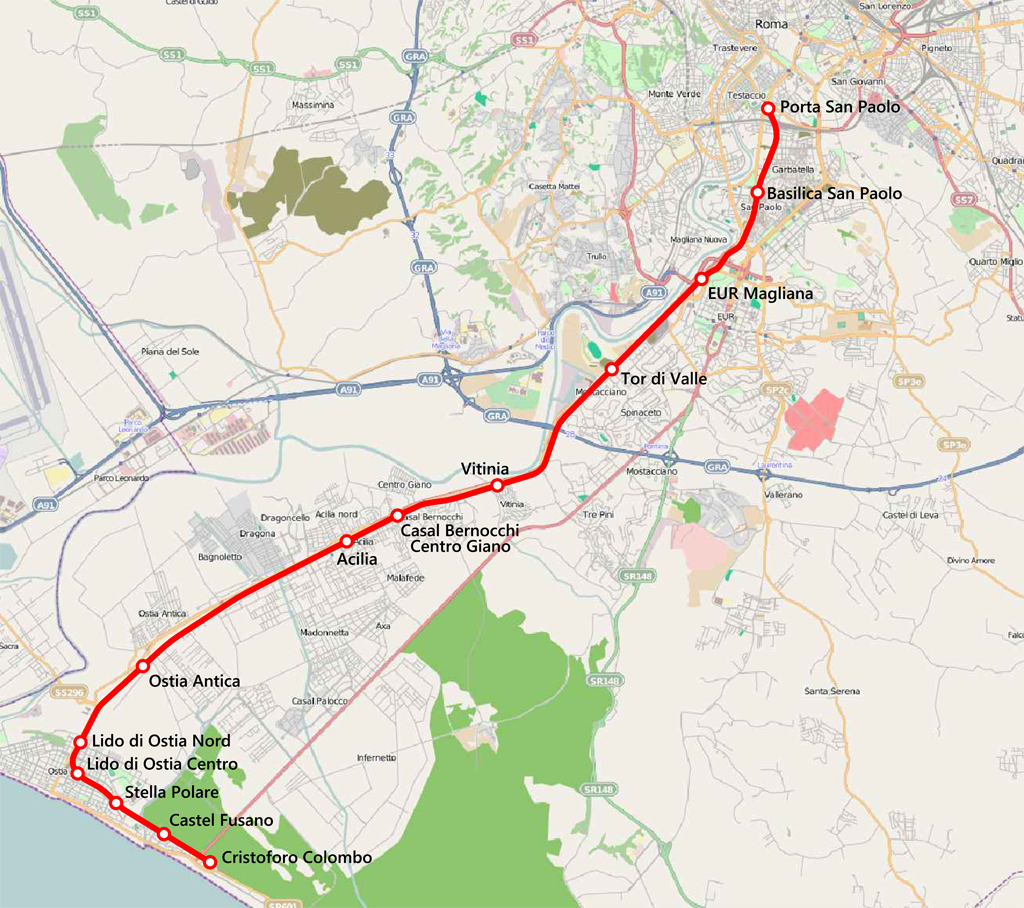
Basic route: Take the Rome Metro to Piramide, transfer to Metromare (formerly Roma-Lido), and get off at Ostia Antica Station.

Travel time: Around 45–60 minutes, depending on where you start in Rome.

Walk from the station: About 10–15 minutes to the entrance of the ruins.

Best reason to go: Ancient Roman roads, mosaics, bathhouses, homes, shops, and the theater.

Optional add-on: Continue by train to Lido Centro and walk to the beaches of Lido di Ostia, sometimes called Ostia Beach.

This makes Ostia Antica from Rome one of the easier ancient sites to visit without renting a car or joining a tour.

Roman Amphitheater at Ostia Antica
View of the Coastline from Ostia Pier
Ostia Pier and the Beaches of Lido di Ostia

Rome to Ostia Antica by Train: Easy Day Trip to Ancient Ruins and the Beach - Table of Contents

Disclaimer:  Buzzin’ Around the World strives to provide accurate and up-to-date information based on our research at the time of publication. We respect all applicable laws and fair use principles. If you believe any information is incorrect or violates regulations, please contact us at buzzinaroundtheworld@gmail.com.

Affiliate Links and Reviews:  We use affiliate links to generate income and may receive a commission at no additional cost to you when you use our links. We strive for honest and transparent reviews, even for products which we receive compensation.

Content Creation:  Our content is based on our own travel experiences. All photos are our own unless otherwise stated. We sometimes utilize AI tools to assist with tasks like generating titles, summarizing content, and improving organization.

For more information:  For more information, please click HERE to visit our private policy page. We can be reached at buzzinaroundtheworld@gmail.com

How to Get from Rome to Ostia Antica by Train

It is easy to travel from Rome to Ostia Antica by train, but the route can look confusing at first because it usually involves both the Rome Metro and the commuter rail line to the coast.

The first step is to get to Piramide Station in Rome. If you are starting near Termini, you can take Metro Line B toward Laurentina and get off at Piramide. If you are staying somewhere else in Rome, use the Metro or local transit to reach Piramide.

At Piramide, follow the signs for Porta San Paolo / Metromare (formerly Roma-Lido). Take the train toward Ostia and get off at Ostia Antica Station.

Rome Metro Map
Rome Metro Map

Map by Basso Leonardo, via Wikimedia Commons, licensed under CC BY-SA 4.0

Metromare (formerly Roma-Lido) Route Map

Map by Arbalete and OpenStreetMap contributors, via Wikimedia Commons, licensed under CC BY-SA 2.0. Map data © OpenStreetMap contributors.

From Ostia Antica Station, it is a simple walk to the archaeological park. During my visit, I was not completely sure which way to go when I got off the train, but it quickly became obvious. Even though the train line is also used by commuters, almost everyone who got off at this stop was walking toward the ruins.

The walk from the station to the entrance took about 10–15 minutes.

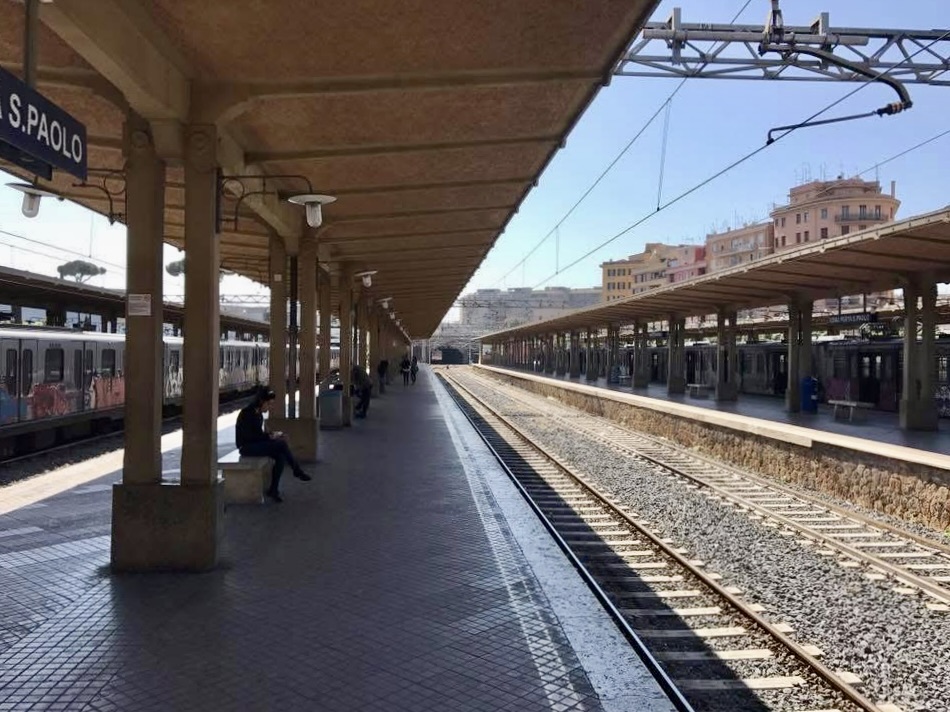
Waiting for the Train at Porta San Paolo Station
A Bridge Near the Entrance to Ostia Antica

Rome to Ostia Antica Train Tickets

One of the reasons Ostia Antica is such an easy day trip from Rome is that the train ride is inexpensive and straightforward. During my visit, I used public transportation and traveled by Metro and Metromare (formerly Roma-Lido).

If you are using a transit pass or the Roma Pass, check the current rules before visiting because ticket coverage can change. If you are buying individual tickets, confirm the current fare before your trip.

The main thing to know is that you do not need a long-distance train ticket to reach the ruins. This is a local transit trip from Rome, not a major rail journey.

Ostia Antica Tickets and Opening Hours

Before visiting, check the official Ostia Antica website for current ticket prices, free-entry dates, and opening hours. Hours can change by season, and ticket prices may change over time. At the time of this update, the official ticketing page lists full admission at €18, but I recommend checking current prices before visiting.

Ostia Antica is generally open Tuesday through Sunday and closed Monday, with seasonal closing times. The ticket office usually closes one hour before the archaeological area closes, so check the official schedule before your visit.

During my visit, I used the second free entry from my 72-hour Roma Pass to enter the site. That made the trip even better because the transportation and admission were both simple. Even if you pay the regular admission price, I think Ostia Antica is worth visiting because the site is large, scenic, and far less crowded than many of Rome’s major attractions.

My Photo Tour of the Ostia Antica Ruins

I had never seen anything quite like Ostia Antica. When I entered the ruins, I immediately wanted to walk down every road and look inside every structure.

My advice is to avoid spending too much time in the first section. I enjoyed that area, but many of the most impressive ruins came later along the route. The archaeological park is large, and it is difficult to see everything in a single visit.

In the section below, I have mapped out my route as best as possible and included the highlights from my visit.

Ruins of Ostia Antica Just Inside the Entrance Gate
Many Items in Ostia Antica are Recognizable and in Incredible Shape

Walking the Ancient Roman Roads

Fairly quickly, the main pathway met up with an ancient Roman road. From there, I walked past broken statues, stone walls, and the remains of ancient buildings.

This was one of the reasons I enjoyed visiting Ostia Antica from Rome so much. The site felt different from the ruins in central Rome. Instead of looking at one famous landmark, I felt like I was walking through an ancient city. The roads, walls, and building remains made it easier to imagine what daily life may have looked like when the city was active.

An Ancient Roman Road at Ostia Antica
A Headless Roman Statue at Ostia Antica

The Baths of Neptune

On my way to the Ostia Antica theater, I stopped at one of the highlights of the ruins: the Baths of Neptune.

Steps to a Viewing Point of the Baths of Neptune
Baths of Neptune
Baths of Neptune

The Baths of Neptune are known for their impressive mosaics. These were one of my favorite things to photograph because they were still easy to see and added detail to the ruins.

The bath complex also helped show how advanced Roman engineering was. As I walked through this area, it was easy to imagine how important public baths would have been in daily Roman life.

Baths of Neptune Mosaics
Baths of Neptune Area of Ostia Antica

The Roman Theater at Ostia Antica

After visiting the Baths of Neptune, I continued toward the Roman Theater at Ostia Antica. This was one of my favorite stops in the entire archaeological park. The theater is in remarkable condition and gives visitors a great view over part of the ruins. Be sure to walk up to the top because this is one of the best photo locations at the site.

The Ground Level of the Roman Theater at Ostia Antica
A View from the Top of the Theater at Ostia Antica

From the upper rows, I could see the ancient streets, surrounding buildings, and wide-open areas of the archaeological park. This was probably my favorite place for photographing the ruins. If you enjoy viewpoints, this is one of the best parts of visiting Ostia Antica from Rome.

A Great View from the Theater at Ostia Antica
Looking Through the Trees from the Top of the Amphitheater at Ostia Antica
Looking Through the Trees from the Top of the Theater at Ostia Antica

Houses, Shops, and Everyday Life in Ostia Antica

After leaving the theater, I continued walking down the Roman road past old shops, housing areas, and other structures. This part of Ostia Antica was especially interesting because it felt more connected to everyday life. Many ancient sites focus on temples, monuments, and major public buildings, but this one also shows where people worked, shopped, and lived.

The Market Area of Ostia Antica
Markets on the Lower Floor, Housing on the Upper Floor - Ostia Antica, Italy
Markets on the Lower Floor, Housing on the Upper Floor

Some of the buildings made it easy to picture merchants operating on the lower levels while people lived above. Walking through these streets gave the ruins a more complete feeling than many other Roman sites I have visited.

Throughout my walk, I took over 200 photos. I also tried to photograph signs whenever I could so I would remember what each building was. There is no way to include every interesting structure on this page, but that is also part of what makes the site worth visiting. There is always another street, doorway, mosaic, or ruin to explore.

Walking Toward the Tiber River

As I continued down the ancient road, parts of the ruins became more overgrown. Some areas looked partially buried, while others were covered with plants.

Eventually, I reached the area near the Tiber River, turned around, and walked back toward the entrance. By that point, I had spent several hours exploring the ruins, and I still felt like there was more to see. That is why I would recommend giving yourself plenty of time if you are planning a day trip to Ostia Antica from Rome.

Roman Ruins that Still Need to be Excavated at Ostia Antica
The Tiber River Off in the Distance

Do You Need a Guided Tour of Ostia Antica?

Personally, I do not think a guided tour is necessary to enjoy Ostia Antica. I visited independently and had a great experience walking through the ruins, taking photos, and exploring at my own pace.

That said, I understand why some visitors prefer a guide. A guided tour could be helpful if you want more historical background, want help identifying specific buildings, or prefer having the ruins explained as you walk.

For independent travelers, the site is still very manageable. The train is easy, the walk from the station is simple, and the archaeological park can be explored without a guide.

Below are various tour options for Ostia Antica. I am an affiliate partner of Viator. If you book a tour using one of the links below, I will receive a small commission. This commission is at no additional cost to you. If a tour interests you, I would greatly appreciate it if you would consider booking using one of my links.

Can You Visit Ostia Antica and Ostia Beach in the Same Day?

Yes, you can visit Ostia Antica and Ostia Beach in the same day. This is one of the reasons I think the trip is such a good option from Rome.

After spending more than three hours at the ruins, I walked back to Ostia Antica Station and took Metromare (formerly Roma-Lido) two more stops to Lido Centro Station. From there, I walked through town toward the water.

During my walk from Lido Centro Station to the coast, I passed several attractive houses and streets. The area felt completely different from central Rome, which made the day trip feel even more worthwhile.

Walking Towards the Mediterranean Sea in Ostia, Italy
Beautiful Houses in Ostia, Italy

Visiting Ostia Beach from Rome

This trip was the first time I had ever reached the Mediterranean coastline. At Lido di Ostia, the water is technically the Tyrrhenian Sea, which is part of the Mediterranean. Even though it was March, the air temperature was warm enough that I was able to wade into the water.

If you are already taking the train from Rome to Ostia Antica, continuing to Lido di Ostia is an easy way to add the coast to your day trip. You simply continue a few stops on the same train line and get off at Lido Centro.

Tyrrhenian Sea Beach - Lido di Ostia
Ostia Pier
Ostia Pier

I highly recommend walking out on the Ostia Pier. The pier provides a great view of the nearby beaches and coastline. It was a relaxing way to end the day after spending several hours walking through the ruins.

View of the Coastline from Ostia Pier
The Beach from the Ostia Pier

Near Lido Centro Station, I also found an outdoor mall with a few shops and restaurants. This made it easy to take a short break before heading back to Rome.

Shopping Area by Lido Central Station - Ostia, Italy
Walking Back Towards Lido Central Station from Ostia Pier

Taking the Train Back to Rome from Ostia

To return to Rome, I walked back to Lido Centro Station and took Metromare (formerly Roma-Lido) back to Piramide. From there, I transferred to Metro Line B and got off at Cavour, which was near my hotel.

The return trip was simple and made the entire day feel easy. I was able to visit ancient ruins, walk through Ostia, see the Tyrrhenian Sea, and return to Rome without needing a car or tour bus.

Final Thoughts: Is Ostia Antica a Good Day Trip from Rome?

Ostia Antica is a great day trip from Rome, especially if you enjoy ancient ruins but want a quieter experience than the major sites in the city center.

The ruins are large, scenic, and easy to explore independently. I especially enjoyed the ancient Roman roads, Baths of Neptune, mosaics, theater, and the areas that showed everyday life in the ancient city.

The train ride also makes the trip practical. Traveling from Rome to Ostia Antica by train is straightforward, and the walk from the station to the ruins is short. If you have extra time, continuing to Lido di Ostia and Ostia Beach adds another layer to the day trip.

For me, this was one of the most enjoyable experiences I had near Rome. If you have already seen the Colosseum, Roman Forum, and major sights in central Rome, Ostia Antica is absolutely worth considering.

Affiliate Partner of the Month – Fourthwall

Fourthwall powers our brand-new Buzzin’ Around the World Merch Shop. Pick up a tee, hoodie, or sticker. All profits will help me continue to run this site and deliver great content!

Buzzin Around the World's Merch Shop

Want to Launch Your Own Merch Line? 

Scroll to the bottom of our Fourthwall page and tap “Start Your Own Store.” That’s a referral link—if you sign up, Fourthwall rewards me with store credit I can use to buy more gear (at no extra cost to you). We only recommend tools we use and love.

Earn $200 in Travel Rewards with the Capital One VentureOne Rewards Card

The Capital One VentureOne Rewards Card is one of the few rewards cards that does not charge an annual fee. Cardholders can earn 1.25 points for every dollar spent while enjoying 0% APR for 15 months.

Currently, Capital One is offering a signup bonus of 20,000 points (worth $200 in travel rewards) when the cardholder spends $500 in the first three months. If you are interested in this card, I would appreciate it if you would sign up with the link below, as I earn a referral bonus of 10,000 points. Those points are worth $100 in travel rewards and will help me continue to bring great content to Buzzin’ Around the World.

Once again, the Capital One VentureOne card is one of the few reward cards without an annual fee and is the perfect card for someone who is just starting to get into the travel points game.

Related Content: