Self-Guided Walking Tour of Geneva, Switzerland
About My Self-Guided Walking Tour of Geneva
I visited Geneva, Switzerland, in August 2022 and spent a full day exploring the city mostly on foot. I stayed at Design Hotel F6, which was a convenient base between Geneva Cornavin Station, Lake Geneva, and Geneva’s international district.
Since I enjoy walking when I travel, I decided to create my own self-guided walking tour of Geneva instead of booking a guided tour. Walking gave me exercise, helped me see more of the city between the major sights, and made it easy to connect Lake Geneva, Old Town Geneva, St. Pierre Cathedral, the Reformation Wall, and the Jet d’Eau in one day.
I did not start especially early, probably around 9:00 or 10:00 a.m., but I still had enough time to spend the day walking, sightseeing, and exploring until dusk. After finishing the main walking route near the lakefront and Pont du Mont-Blanc area, I used Geneva’s tram system to continue toward the United Nations and the International Red Cross and Red Crescent Museum.
This route worked well for me because Geneva is compact, scenic, and easy to explore at your own pace. It also gave me a better feel for the city than I would have gotten by only moving between major attractions.
Table of Contents
- About My Self-Guided Walking Tour of Geneva
- Is Geneva Walkable?
- Geneva Walking Tour Map
- My Self-Guided Walking Tour
- Places I Visited After My Geneva Walking Tour
- Taking a Lake Geneva Cruise
- Geneva Tours and Packages
- Support Buzzin’ Around the World – Visit Our Affiliates
- Earning Points and Rewards
- Related Content
Disclaimer: Buzzin’ Around the World strives to provide accurate and up-to-date information based on our research at the time of publication. We respect all applicable laws and fair use principles. If you believe any information is incorrect or violates regulations, please contact us at buzzinaroundtheworld@gmail.com.
Affiliate Links and Reviews: We use affiliate links to generate income and may receive a commission at no additional cost to you when you use our links. We strive for honest and transparent reviews, even for products which we receive compensation.
Content Creation: Our content is based on our own travel experiences. All photos are our own unless otherwise stated. We sometimes utilize AI tools to assist with tasks like generating titles, summarizing content, and improving organization.
For more information: For more information, please click HERE to visit our privacy policy page. We can be reached at buzzinaroundtheworld@gmail.com.
Is Geneva Walkable?
Geneva is a very walkable city, especially if you are staying near the train station, Lake Geneva, or Old Town. The lakefront is flat and easy to follow, and many of Geneva’s most famous sights are close enough to connect on foot.
The one thing to know is that Old Town Geneva sits above the lakefront, so there are some hills, stairs, and cobblestone streets. It was not a difficult walk, but comfortable shoes definitely helped. I like walking when I travel because it feels healthy, gives me exercise, and lets me notice smaller details along the way that I would probably miss from a car or tour bus.
Another thing I appreciated about walking around Geneva was the number of public drinking fountains throughout the city. I saw potable water fountains in different areas, which made it easier to refill my water bottle during a full day of sightseeing. That was especially helpful since I visited in August and spent most of the day outside.
For my route, I walked the main central sights first. Later in the day, I used Geneva’s tram system to continue toward the United Nations and the International Red Cross and Red Crescent Museum.
Geneva Walking Tour Map
To make this route easier to follow, I created a simple Geneva walking tour map based on the route I took during my self-guided visit. The main walking portion connects the lakefront, Old Town, St. Pierre Cathedral, the Reformation Wall, and the Jet d’Eau.
I also included the United Nations, Broken Chair, and International Red Cross and Red Crescent Museum as optional add-ons because I visited them later in the day by tram. This keeps the main route realistic as a self-guided walking tour of Geneva, while still showing how I added more of the city after finishing the central walk.
My general route was:
Design Hotel F6 → Brunswick Monument → Bains des Pâquis / Phare des Pâquis → Lake Geneva Waterfront → Pont du Mont-Blanc → Jardin Anglais and Flower Clock → Old Town Geneva → Place du Bourg-de-Four → St. Pierre Cathedral → Parc des Bastions and Reformation Wall → Jet d’Eau → Tram toward the United Nations and Red Cross Museum
This map is meant to show the general route I followed, not a strict step-by-step path. Geneva is easy to adjust as you go, especially around the lakefront and Old Town. I did not include every possible stop in central Geneva. Instead, this map focuses on the places I actually visited or clearly walked through during my day in the city.
My Self-Guided Walking Tour of Geneva
Brunswick Monument
I started my self-guided walking tour near the lakefront and made my way toward the Brunswick Monument. This was one of the first major landmarks I saw during my walk through Geneva.
The monument stands near the Lake Geneva waterfront and is hard to miss because of its detailed neo-Gothic design. It is actually a mausoleum, which makes it feel very different from the other landmarks along the lakefront. It felt like a good starting point because it was close to the lake, close to the bridge, and easy to connect with the rest of my Geneva walking route.
Bains des Pâquis and Phare des Pâquis
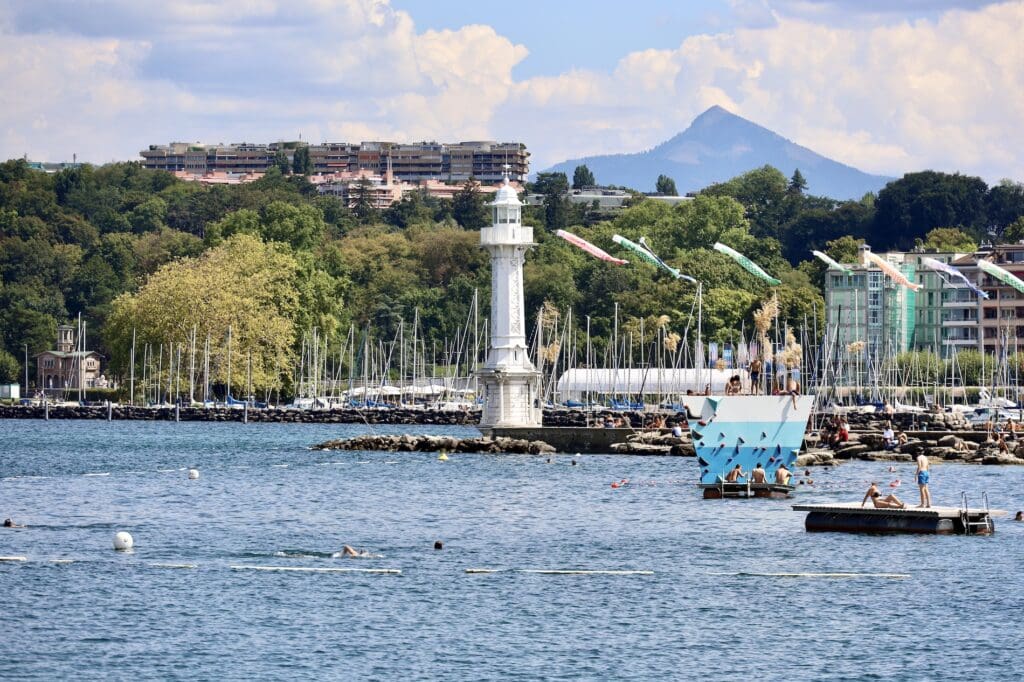
Before continuing along the Lake Geneva waterfront, I passed Bains des Pâquis and the Phare des Pâquis. This area had a completely different feel from the historic parts of Geneva. Instead of monuments and old streets, it felt like a local lakefront hangout, with people swimming, sunbathing, and relaxing by the water.
The white lighthouse, marina, swimmers, and mountain views made this one of the more memorable photo stops from my walk. It also helped show how Geneva is not just a city of international organizations and historic landmarks, but also a place where people actually spend time outdoors along the lake.
Lake Geneva Waterfront
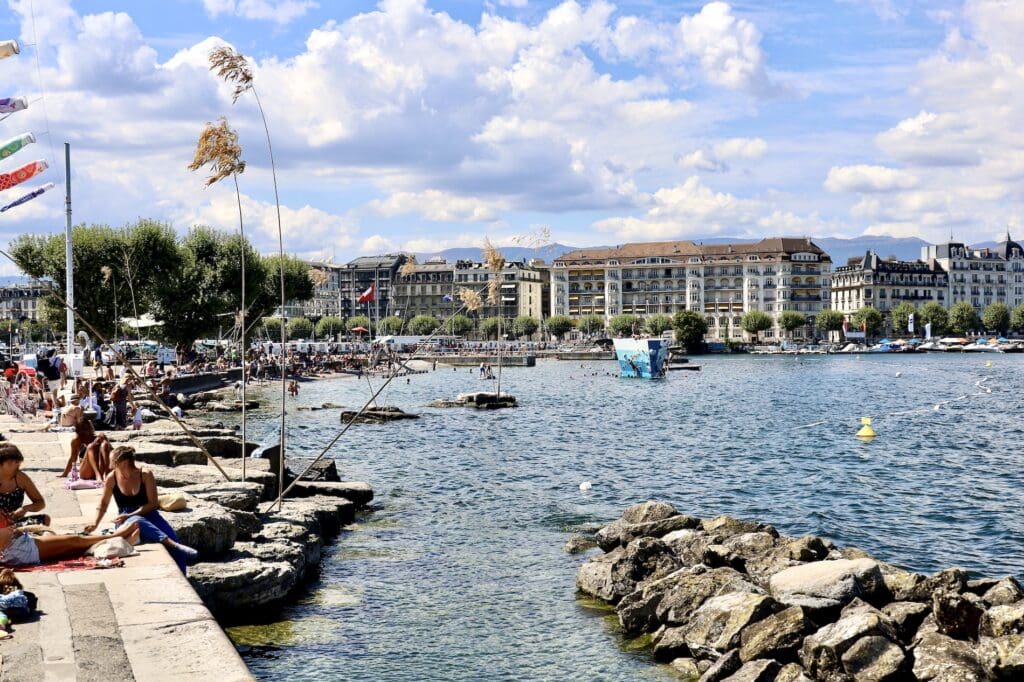
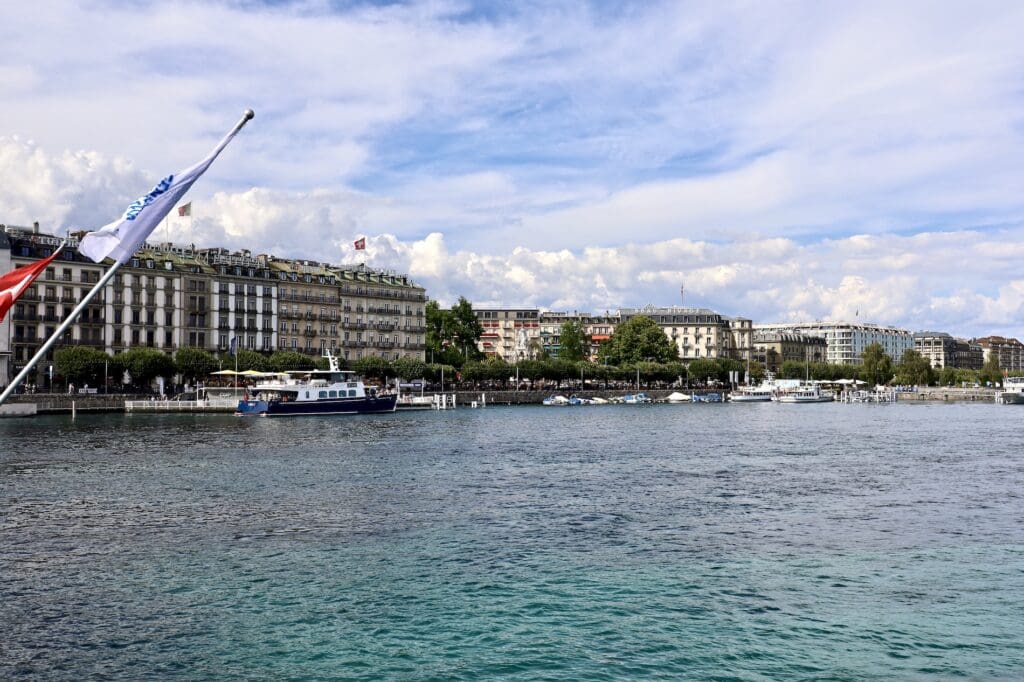
From Bains des Pâquis, I continued along the Lake Geneva waterfront. This was one of my favorite parts of the walk because it gave me classic views of the city, the water, the boats, and the mountains in the distance.
The waterfront is one of the easiest places to walk in Geneva. It is flat, scenic, and a great place to slow down between the bigger landmarks. I also liked that I could see the Jet d’Eau from different angles as I moved along the lake.
If you only have a short amount of time in Geneva, I think walking along Lake Geneva is one of the best things to do. It gives you a strong feel for the city without needing much planning.
Pont du Mont-Blanc
Next, I crossed the Pont du Mont-Blanc, one of the main bridges over the Rhône River where it flows out of Lake Geneva. This was an easy and useful part of the route because it connected the lakefront area with the side of the city leading toward Jardin Anglais, the Flower Clock, and Old Town Geneva.
The bridge also gave me great views back toward the lake and the Jet d’Eau. For a self-guided walking tour, this is one of those simple connecting points that makes the route feel natural.
Jardin Anglais and Flower Clock
After crossing the bridge, I walked toward Jardin Anglais and the Flower Clock. The Flower Clock is one of Geneva’s most recognizable landmarks and reflects the city’s connection to Swiss watchmaking.
When I visited in August 2022, there was also a Ferris wheel set up near the Jardin Anglais area. It appears in the background of some of my photos and made the lakefront feel a little more active than I expected. Since it may be seasonal, I would not plan a Geneva walking route around it, but it was part of what I saw during my visit.
This stop does not take very long, but it is worth including because it fits naturally between the lakefront and Old Town. Jardin Anglais also gives you a nice place to pause before climbing into the older part of the city.
Old Town Geneva
From the lakefront area, I made my way into Old Town Geneva. This was where the walk started to feel different. Instead of wide lake views and open waterfront paths, Old Town had narrower streets, historic buildings, stone pathways, and more uphill walking.
Old Town Geneva is one of the best areas to explore on foot because the streets are compact and atmospheric. I did not feel like I needed a strict route here. Part of the fun was walking through the old streets, turning corners, and seeing what I found along the way.
As I walked through Old Town Geneva, I passed through Place du Bourg-de-Four, one of the historic squares in the old city. I did not take a separate photo here, but it fits naturally into the route between the narrow Old Town streets and St. Pierre Cathedral.
I also stumbled into the Old Arsenal area while exploring Old Town. This was one of those stops that made the self-guided walk more enjoyable because I was not just moving from one famous landmark to the next. I was also finding smaller historic corners of Geneva that I might have missed if I had only followed a strict checklist.
This is also the section of the walk where comfortable shoes matter most. The hills and cobblestones are not extreme, but they are noticeable after already spending part of the day walking.
St. Pierre Cathedral
One of the main stops in Old Town was St. Pierre Cathedral. The cathedral is one of the most important landmarks in Geneva and is closely connected to the city’s Reformation history.
I enjoyed seeing the cathedral from the outside and walking around the surrounding area. I also paid to go up into the cathedral’s tower area and found views from a few interesting rooms along the way.
Somehow, though, I never made it to the unobstructed viewpoint at the top of the bell tower. When I exited, I realized I had missed what was probably the best view from St. Pierre Cathedral.
Because of that, St. Pierre Cathedral is one place where I would slow down and pay closer attention to the route through the tower area. Even though I missed the main viewpoint, it was still an essential stop on my Geneva walking route. If you are creating your own self-guided walking tour of Geneva, I would definitely include the cathedral, but I would also make sure to follow the signs carefully so you do not accidentally miss the top viewpoint like I did.
Parc des Bastions and Reformation Wall
After visiting the cathedral area, I continued toward Parc des Bastions and the Reformation Wall. This was another major stop connected to Geneva’s history and the Protestant Reformation.
The main figures on the wall are William Farel, John Calvin, Theodore Beza, and John Knox. As a Global Studies teacher, I found this stop fascinating because it connected directly to European history, religion, reform movements, and the way ideas spread across borders. It was one of those places where the history felt more real because I was standing in front of the people and symbols I had learned about and taught in different contexts.
The Reformation Wall also helped explain why Geneva has such an important place in religious and political history. It was not just another monument on the route. For me, it added a deeper historical layer to the walk before I returned toward the lakefront and the Jet d’Eau.
Jet d’Eau / Geneva Fountain
The Jet d’Eau, also known as the Geneva Fountain, is Geneva’s most recognizable landmark. I saw it throughout the day from different parts of the lakefront, bridges, and viewpoints.
Even though it is simple in concept, it really does stand out because of its size and location on Lake Geneva. Seeing it from multiple angles was one of the benefits of exploring Geneva on foot. I did not just stop once, take a photo, and leave. I kept seeing it as part of the city’s skyline while walking.
For photos, I especially liked seeing the Jet d’Eau from the lakefront and from areas where it lined up with the water, bridges, and city behind it.
After finishing the main part of my self-guided walking tour near the lakefront and Pont du Mont-Blanc area, I used Geneva’s tram system to continue toward the international district. This part of the day was not really part of the main walking route, but it was still easy to add after exploring central Geneva.
United Nations and Broken Chair
My next stop was the United Nations Office at Geneva area. I did not tour the inside, but I wanted to see the outside of the complex and the famous Broken Chair sculpture.
This area felt very different from Old Town and the lakefront. Instead of historic streets and waterfront views, this part of Geneva showed the city’s international identity. Geneva is strongly associated with diplomacy, humanitarian work, and international organizations, and this area made that side of the city feel more real.
If you have extra time after your walking tour, I think the United Nations area is a worthwhile add-on. I would not include it as part of the core walking route unless you really enjoy long walks, but it works well by tram.
International Red Cross and Red Crescent Museum Area
My final stop was the International Red Cross and Red Crescent Museum, located near the headquarters of the International Committee of the Red Cross. Unfortunately, the museum was closed when I arrived, so I did not get to go inside. Even though I missed the exhibits, I was still glad I made the trip because seeing the museum building and the nearby ICRC headquarters helped connect this part of Geneva to the city’s humanitarian identity.
This stop was especially meaningful to me as a teacher. At the end of the school year, my students complete a project where they research real-world issues and contact experts connected to their topic. Over the years, several of them have reached out to people connected with the International Red Cross and Red Crescent or the ICRC. Because of that, seeing this part of Geneva felt personally relevant, even though I was not able to visit the inside of the museum.
For my route, this area made sense after seeing the United Nations and Broken Chair. I would still recommend pairing these stops if you are interested in Geneva’s international organizations, but I would check the museum hours before making the trip.
Taking a Lake Geneva Cruise
In addition to my self-guided walking tour, I also took a Lake Geneva cruise during my time in the city. The cruise gave me a different perspective from the walking route because I could see Geneva from the water instead of only from the waterfront paths and bridges.
Walking helped me experience the city up close, while the boat ride helped me appreciate the lake, skyline, Jet d’Eau, and surrounding scenery from a wider angle. If you have enough time, I think combining a Geneva walking tour with a short Lake Geneva cruise is a great way to experience the city.
I also wrote a separate guide about my Lake Geneva cruise and how it was free with my Swiss Travel Pass.
I explored Geneva on my own and did not feel like a guide was necessary for this route. The city was easy enough to walk independently, especially with a map and a general plan.
That said, a guided walking tour could be a good option if you want more historical context, especially around Old Town Geneva, St. Pierre Cathedral, the Reformation Wall, and Geneva’s role in international diplomacy.
A guided tour could also make sense if you only have a short time in the city and want someone else to handle the route. For me, the self-guided approach worked well because I enjoy walking, taking photos, and moving at my own pace.
Affiliate Partner of the Month – Fourthwall
Fourthwall powers our brand-new Buzzin’ Around the World Merch Shop. Pick up a tee, hoodie, or sticker. All profits will help me continue to run this site and deliver great content!
Buzzin Around the World's Merch Shop
Want to Launch Your Own Merch Line?
Scroll to the bottom of our Fourthwall page and tap “Start Your Own Store.” That’s a referral link—if you sign up, Fourthwall rewards me with store credit I can use to buy more gear (at no extra cost to you). We only recommend tools we use and love.
Earn $200 in Travel Rewards with the Capital One VentureOne Rewards Card
The Capital One VentureOne Rewards Card is one of the few rewards cards that does not charge an annual fee. Cardholders can earn 1.25 points for every dollar spent while enjoying 0% APR for 15 months.
Currently, Capital One is offering a signup bonus of 20,000 points (worth $200 in travel rewards) when the cardholder spends $500 in the first three months. If you are interested in this card, I would appreciate it if you would sign up with the link below, as I earn a referral bonus of 10,000 points. Those points are worth $100 in travel rewards and will help me continue to bring great content to Buzzin’ Around the World.
Once again, the Capital One VentureOne card is one of the few reward cards without an annual fee and is the perfect card for someone who is just starting to get into the travel points game.
Related Content
Share this:
- Share on X (Opens in new window) X
- Share on Facebook (Opens in new window) Facebook
- Share on LinkedIn (Opens in new window) LinkedIn
- Share on Pinterest (Opens in new window) Pinterest
- Share on Tumblr (Opens in new window) Tumblr
- Share on WhatsApp (Opens in new window) WhatsApp
- Share on Reddit (Opens in new window) Reddit
- Print (Opens in new window) Print